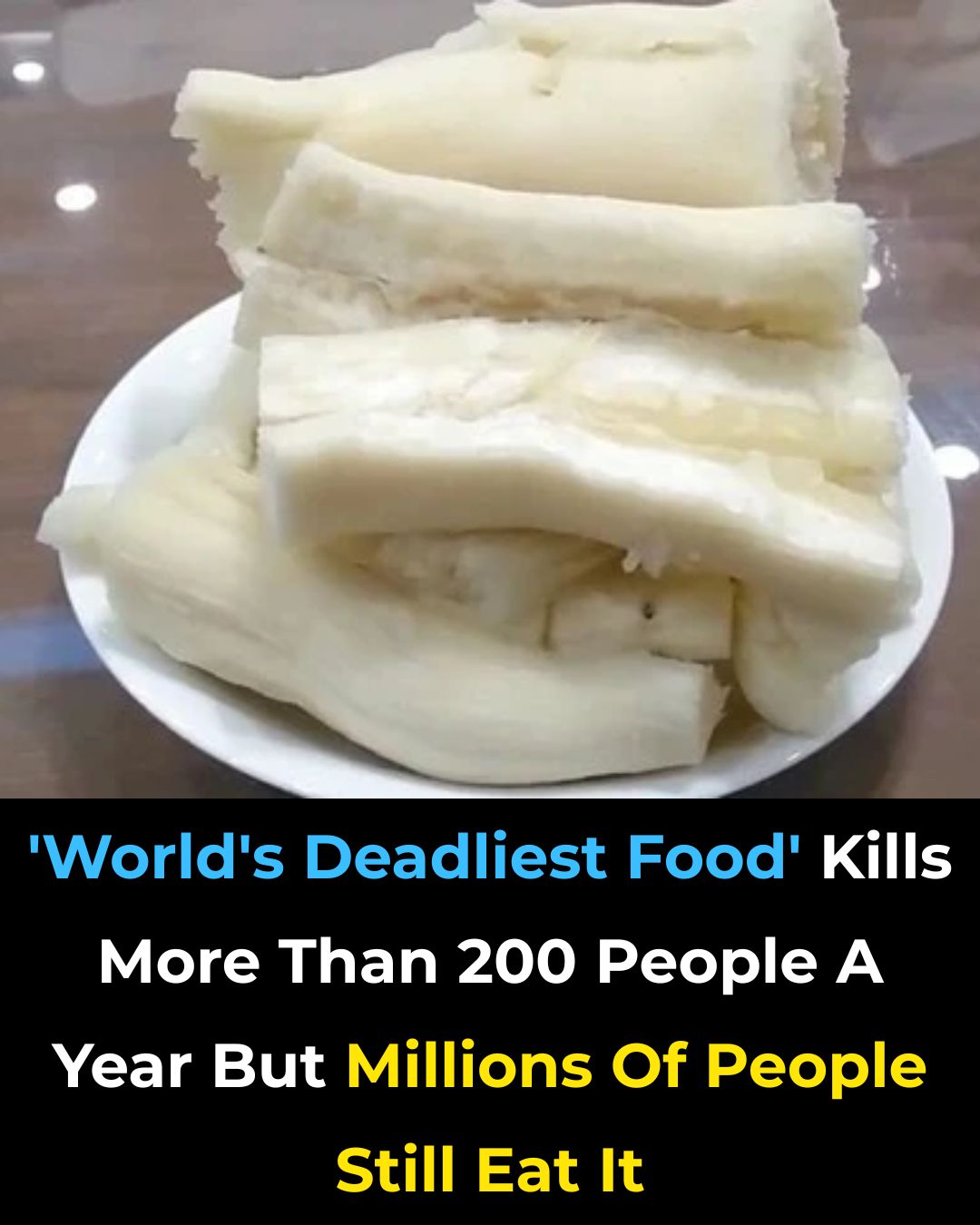
Every year, over 200 people die from consuming what is known as the "world's deadliest food," yet nearly 500 million people still eat it.
There are many foods that could fill you up quickly, but you wouldn't find them on your dinner plate every night. So, what is the food that's both deadly and widely consumed around the globe?
The answer is cassava—a root vegetable that serves as a staple food for millions, yet carries a potentially fatal risk when prepared improperly.
What Is Cassava?
Cassava, also known as manioc, yuca, or mandioca, is a woody shrub native to South America. Its starchy tuberous root is a major source of carbohydrates for hundreds of millions of people across Africa, Asia, and Latin America.
Each year, cassava is consumed by over 500 million people, and hundreds of millions of tons are grown around the world. It is particularly valued because it can survive drought and poor soil conditions where other crops fail, making it a critical food security crop in developing nations.
Why Is It So Dangerous?
The plant's stems, peel, and leaves contain naturally occurring compounds called cyanogenic glucosides. When these compounds are not properly processed, they can release hydrogen cyanide—a potent toxin that can be fatal to humans.
The World Health Organization (WHO) reports that around 200 people die annually from eating improperly prepared cassava. This dangerous exposure is especially prevalent during times of famine and war, when people may skip proper processing due to food scarcity.
The WHO explains:
"Cassava tubers contain varying amounts of cyanogenic glucosides that serve as a defense against animals and insects. When these glucosides are not processed correctly, cassava can release cyanide, leading to high dietary cyanide exposure."
Publicité